Amboseli Safari: Elephants Beneath Kilimanjaro
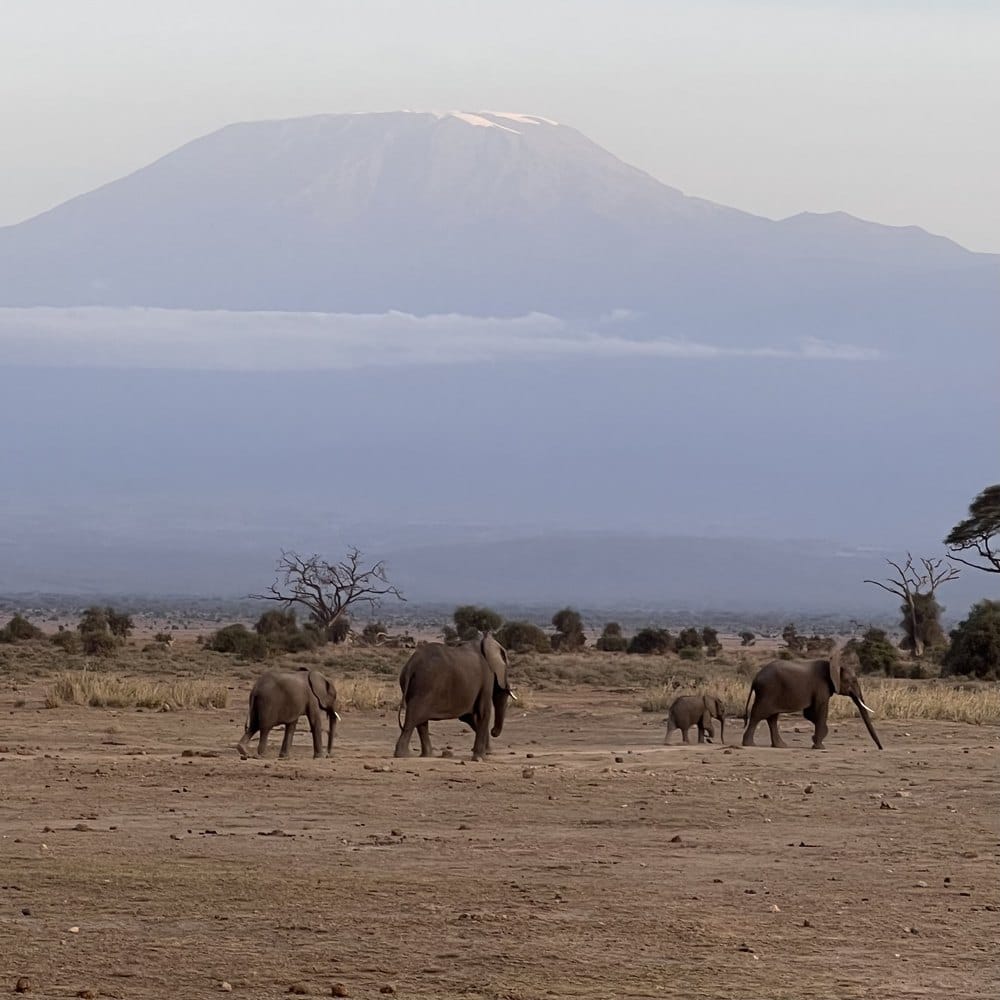
An Amboseli safari is the one that gives you Africa’s most recognizable picture: big elephant herds crossing a dusty plain with snow-capped Mount Kilimanjaro behind them. Amboseli National Park sits in southern Kenya on the Tanzania border, about four hours from Nairobi. It’s known for large, calm, free-ranging elephants — including a few of the last great tuskers — and for spring-fed swamps that stay green even when the rest of the basin is bone dry. The one honest caveat: Kilimanjaro is shy. The mountain shows clearest at dawn and hides behind cloud by mid-morning, so you plan for the elephants and treat the peak as the bonus it is.
What and where Amboseli is
Amboseli is a compact park in Kenya’s far south, right up against the Tanzanian border. The mountain that defines every photograph — Kilimanjaro — actually stands across that border in Tanzania. Amboseli just happens to own the best seat in the house: flat, open plains that give you an uninterrupted foreground of acacia, swamp, and elephant, with Africa’s highest peak floating on the horizon behind.
The name comes from a Maasai word for “salty, dusty place,” and in the dry months the plains do shimmer with dust and heat-mirage. But there’s a quiet paradox at the center of the park. Underground water from Kilimanjaro’s melting snow filters down and surfaces here as permanent swamps. So an otherwise arid basin holds ribbons of bright green marsh — and those swamps are the reason the wildlife stays put and stays visible even in the driest weeks.
It’s not a big park, and that’s part of its appeal for a first-timer: less driving, more sitting quietly with animals. Two to three nights is the usual stay, and it pairs naturally with the bigger open plains of the Maasai Mara.
The elephants (the real reason to come)
Set the mountain aside for a moment, because the elephants are the headline whether or not Kilimanjaro shows its face.
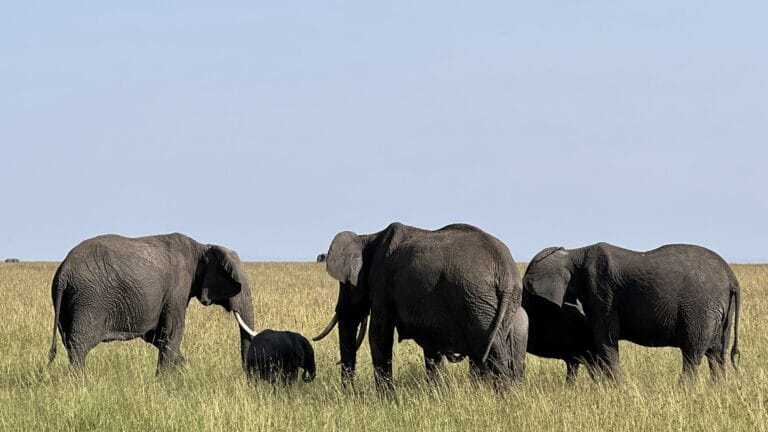
Amboseli’s elephants have been studied continuously since the early 1970s, which means the herds here are unusually relaxed around vehicles. You’re not chasing a distant gray shape through the bush. You sit still, and a family — matriarch, aunties, wobbling calves — walks past on its own schedule, close enough that you put the camera down and just watch. Among them move a handful of the last “big tuskers,” old bulls whose tusks nearly sweep the ground. There are very few of these animals left anywhere on earth, and Amboseli is one of the surest places to see one.
In the heat of the day the herds wade belly-deep into the swamps to feed and cool off. Reed-green water, dry-gold savanna behind it, and a wall of elephants in between — it’s one of the most striking things you’ll see on any safari, mountain or no mountain.
When the mountain actually shows
Here’s the part most guides skate over, and we won’t: you are not guaranteed to see Kilimanjaro. Many travelers are surprised to learn the summit hides behind cloud for most of the day.
What’s true and reliable is the rhythm. The mountain is clearest in the cool, still air just after sunrise — roughly the first two hours of the day — and again in the late afternoon before dusk. By around nine in the morning, cloud usually builds a cap over the peak and keeps it until evening. So if the Kilimanjaro photograph matters to you, the move is simple: be out at first light. Every clear-mountain morning starts before breakfast.
Season matters too. The dry months — roughly June through October, and January through February — give you the most reliable game viewing and the best odds on the mountain. If the sharpest possible peak is your goal, the early-year window (January to February) often wins, because the short rains have washed the dust and haze out of the air and the mountain stands crisp against deep blue. The long dry season is hazier but concentrates the wildlife beautifully around the swamps. Neither window promises the postcard — weather is weather — but both stack the odds in your favor.
(Planning around this is exactly the kind of thing worth talking through before you book — see our guide to the best time for an East Africa safari.)
What else you’ll see
Elephants get the billing, but Amboseli’s open terrain is generous:
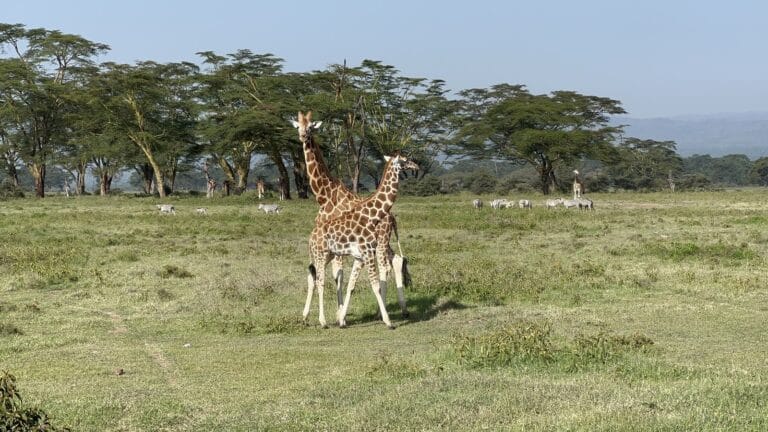
Lions and cheetahs hunt across the grassland — the flat, sightline-friendly plains are ideal cheetah country. Spotted hyenas patrol at dawn. Giraffe, zebra, wildebeest, buffalo, and gazelle graze the open ground, and where there’s plains game there are predators nearby. The swamps and the seasonal shallows of Lake Amboseli draw a genuinely prolific bird list — hundreds of species, including pelicans, crowned cranes, and flamingos when the water’s right — so even a slow game hour is rarely a dull one.
And there’s the culture. Amboseli sits on Maasai land, and a visit to a community-run village, arranged the right way so the money reaches the community, is one of the more honest cultural experiences in Kenya.
Honest notes (so nothing surprises you)
- It’s dusty. The name means “salty dust” for a reason. In the dry season the plains throw up dust devils, and a light scarf or buff for your face and a dust-proof bag for the camera earn their place fast. (Our packing list covers this.)
- The mountain is a gift, not a given. We’d rather you arrive hoping than arrive expecting. The elephants carry the trip on their own.
- The altitude is mild. Amboseli sits around 3,700 feet — low enough that it isn’t a factor for most travelers. (Some of Kenya’s other stops sit higher; that’s a route-planning conversation, not an Amboseli worry.)
- It’s a short, gentle park. Compact distances and unhurried drives make it a kind first stop for anyone new to safari or traveling at an easier pace.
How Amboseli fits your trip
Amboseli is the anchor of our Nine-Day Signature — the route we built for first-timers who want the iconic Kenya experience at a comfortable, unhurried pace, in a private 4×4 with a driver-guide who knows where the herds move and gets you to the swamp edge at the right hour of the right morning. You’re not sharing a minibus with strangers and you’re not being marched through on a fixed clock. It’s the classic image, planned honestly, by someone who’s stood in that dust herself.
If you’re weighing Kenya against Tanzania for the elephants-and-mountain shot specifically, that’s worth a conversation too — here’s how we think about it.
My Amboseli (first person — Milli)
We came to Amboseli in June, on our own first trip, as nervous about doing safari “right” as any of the travelers I now plan for. What I remember isn’t a checklist — it’s the elephants. A whole family crossed in front of us, unbothered, the little ones tripping over their own trunks, and none of us said a word for a long time.
Kilimanjaro I’ll be honest about. The mountain keeps its own counsel — some mornings it’s simply there, floating and impossible, and some mornings it never lifts its cap of cloud at all. What I learned is that the dawn is worth getting up for either way, and that the elephants don’t wait on the weather. The picture everyone chases is real. It’s just earned, at first light, with a little patience — which, come to think of it, is a fair description of safari itself.
— Milli
FAQ
Is Amboseli worth visiting just for the elephants?
Yes. Even on a day the mountain never shows, Amboseli gives you some of the calmest, closest free-ranging elephant viewing in Africa, including a chance at the last big tuskers. The mountain is the bonus.
Will I definitely see Mount Kilimanjaro?
No one can promise it — the summit hides behind cloud most of the day. Your best odds are at dawn and late afternoon in the dry season (June–October or January–February), with the early-year months often giving the crispest view.
How many days do I need in Amboseli?
Two to three nights is the sweet spot. Three gives photographers extra insurance against a cloudy morning.
How do I get there?
It’s about a four-hour drive from Nairobi, or a short flight. On our Signature route it’s built into the itinerary, so you don’t have to work out the logistics.
Is Amboseli good for a first safari or an easier pace?
It’s one of the best. Distances are short, the terrain is flat and open, and the drives are unhurried — a gentle, rewarding place to start.
Planning your first Kenya safari and want the elephants-and-Kilimanjaro morning done right? Plan Your Journey and Milli will map it around you — the right park, the right season, the right dawn. Prefer to ask a quick question first? Message us on WhatsApp.