Iceland by Land and Sea: Why a Guided Route Beats Self-Driving
The most memorable parts of Iceland happen on the water — drifting among icebergs on a glacial lagoon, cruising a fjord — and they’re the parts a rental car can’t reach. A guided, escorted route hands the driving, the boat timings, and the weather calls to someone else, so your days are spent seeing the country instead of managing it.
What can you see from the water that you can’t from the road?
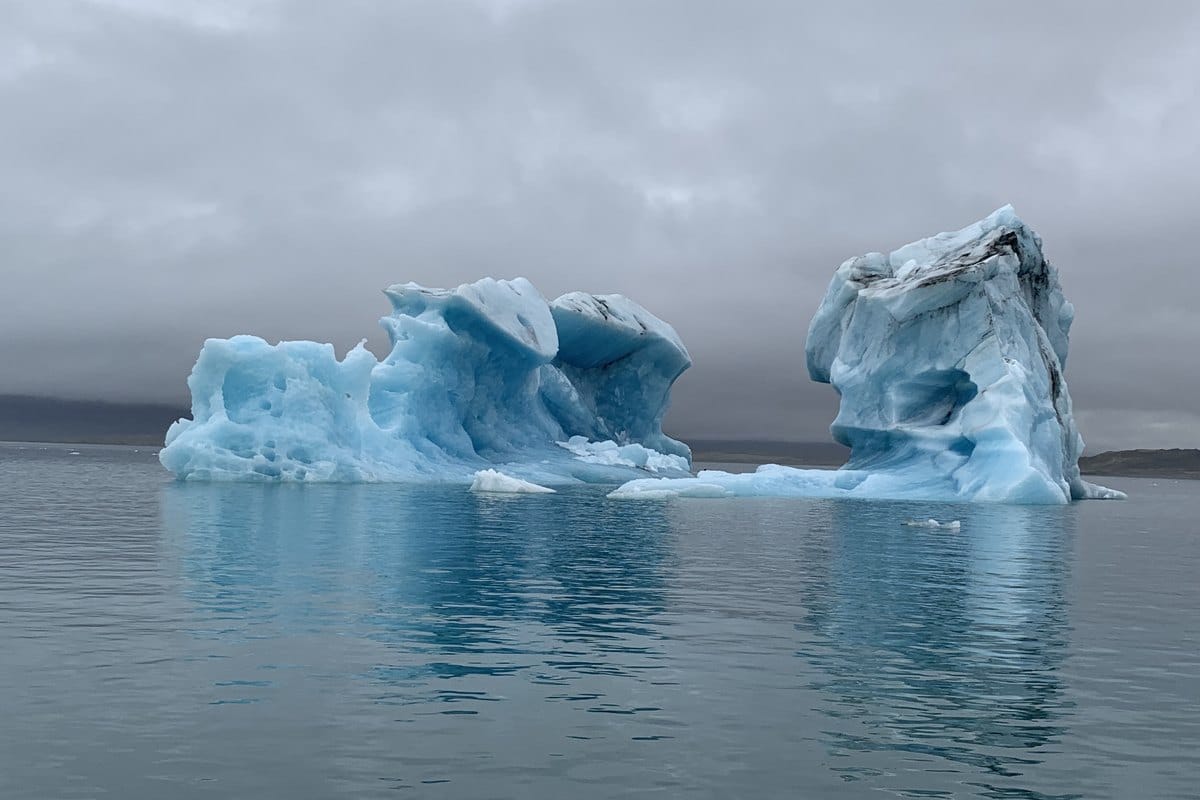
Iceland’s ring road shows you waterfalls, black-sand beaches, and lava fields — and it’s genuinely beautiful. But the island’s most extraordinary moments sit just offshore. A boat out onto a glacial lagoon puts you among icebergs the size of cars, calved off the glacier tongue and drifting slowly out to sea. A coastal or fjord cruise opens a shoreline you simply can’t reach from the highway — sea cliffs, puffin colonies in summer, whales in the right waters. Land and sea together are what make an Iceland trip feel complete rather than half-seen.
Should you self-drive Iceland, or take a guided route?
Plenty of people self-drive Iceland happily, and if that’s you, do it. But it isn’t the only right answer, and it isn’t the “real” way to see the country — that’s a myth worth retiring. Icelandic weather closes roads and cancels boats with no notice, the wind arrives at a strength most visitors have never driven in, and the distances are longer than the map suggests. On a guided route, someone maps the drives, times the boat departures to the weather, and rebooks around the day the sky takes something from you — and it will. You move from a warm, climate-controlled coach to the water and back without managing a single connection.
What does “escorted” actually handle?
The logistics you’d otherwise carry yourself: airport transfers, the drives between regions, boat and excursion timings, hotel transitions, and the weather rebooking that keeps a cancelled morning from swallowing a whole day. By day you’re out in the landscape; by night you’re in warm, well-chosen comfort. What you don’t do is sit up the night before working out whether tomorrow’s lagoon boat is even running.
How much of Iceland should one trip try to hold?
That’s the bigger planning question — where to base yourself, when to go, and what to leave out so the week doesn’t hand you back exhausted. It’s covered in full in our first-timer’s guide: Planning Iceland for the First Time →. Read that for the shape of the trip; come back here once you’ve decided you’d rather have the driving and the boats handled for you.
If Iceland’s on your list, tell me how you like to travel and I’ll help you find the route and the pace that fit — land and sea, without the logistics.