Vegetarian Safari in Kenya: You’ll Eat Better Than You Think
If you’re a vegetarian — or planning a trip for parents who eat strictly vegetarian — Kenya is quietly one of the easiest safari destinations in the world for you. Kenya has a deep, century-old Indian community, which means dal, chapati, sabzi and paneer aren’t “special requests” here; they’re food the country already knows how to cook. On a well-planned safari, with your needs shared with the lodges in advance, a vegetarian isn’t the difficult guest picking at a side salad — you eat genuinely well, three meals a day. I know because I’ve done it: I’m a lifelong vegetarian, and I ate my way happily across Kenya myself.
I’m Milli — and I planned this for families like mine
I live in the Tampa Bay Indian community, I’ve been vegetarian my whole life, and when my husband and I first went to Kenya, the question I heard from every aunty and uncle before we left was the same one you’re probably asking: “But what will you eat?”
It’s a fair worry. You’re picturing a remote camp in the middle of the savanna and wondering whether it’s going to be plain rice and boiled vegetables for ten days — and whether your parents, who only really eat Indian vegetarian food, will manage at all. So the reason Wesley Chapel Travel exists in the first place is partly this: I wanted to plan the trip I’d send my own family on. That means the food question isn’t an afterthought handled at check-in. It’s something we sort out, in writing, before you ever leave.
Why Kenya is the easy one for vegetarians
Here’s the thing most travel sites won’t tell you, because they don’t know it the way our community does: Kenya has one of the oldest and largest Indian diaspora populations in Africa. Indian families have lived, cooked and run kitchens in Nairobi and Mombasa for well over a hundred years. Indian vegetarian food isn’t exotic here — it’s part of the country’s everyday food culture.
What that means on the ground:
- Safari lodges are genuinely used to vegetarian guests, Indian and otherwise — it’s routine, not a scramble.
- Many kitchens can put out familiar dishes — dal, a vegetable curry, chapati or roti, rice, paneer — alongside the usual buffet.
- “Pure vegetarian,” “no egg,” and “no beef/pork anywhere near my plate” are requests kitchens here understand immediately when they’re told ahead of time.
Of all the classic safari countries, Kenya is the one where an Indian vegetarian traveler — or a set of vegetarian parents — is most at home at the table.
What you’ll actually eat
Real talk, not a brochure fantasy:
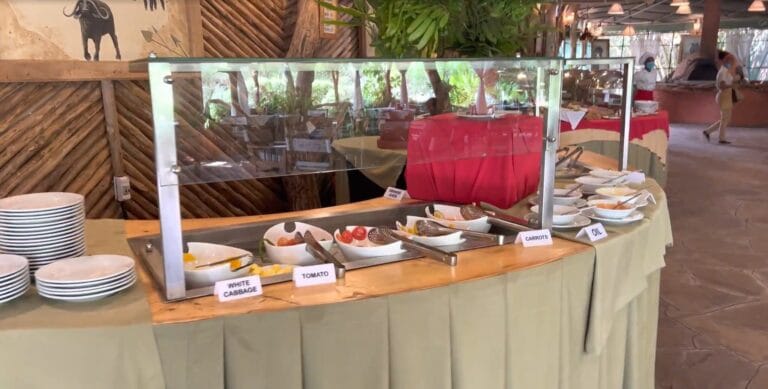
Most safari lodges serve generous buffets — soups, salads, breads, rice, pasta, several cooked vegetable dishes, fresh fruit. There is always plenty for a vegetarian, before you’ve asked for anything special. Kenyan produce is excellent: tomatoes, beans, greens, potatoes, lentils, tropical fruit.
Beyond the buffet, when your needs are shared in advance, kitchens will often prepare dedicated vegetarian dishes for you — including familiar Indian ones — rather than leaving you to graze the sides. Breakfast is easy anywhere (fruit, breads, eggs if you eat them, chai). And yes, you can get a proper cup of chai in Kenya; the country runs on tea.
You will not go hungry, and you will not spend ten days apologizing for being “difficult.”
How we handle it for you
This is the part that turns “it should be fine” into “it’s handled”:
Before your trip is confirmed, we put your dietary needs in writing to every lodge on your route — exactly how strict, exactly what to avoid — and we get it confirmed back. Pure vegetarian, no egg, no onion or garlic, separate preparation, familiar Indian dishes where you want them: whatever it is, it’s communicated ahead and written into your arrangements, not sprung on a chef at 7pm. If a particular property can’t meet a need, we’d rather know that before you book and route you somewhere that can.
You travel in your own private vehicle with your own guide, so meal stops and pacing flex around you, too.
Stricter needs — Jain and beyond
If your family keeps Jain — no onion or garlic, no root vegetables like potato, ginger or carrot, and often no eating after dark — that’s a stricter ask, and honesty matters here: it needs more advance arranging, and it’s not automatic at every lodge. But it is absolutely doable with the right planning and the right properties, and it’s exactly the kind of thing we confirm in writing, lodge by lodge, before you commit. Tell us how strict, and we’ll build the route around kitchens that can genuinely do it — or tell you plainly where the limits are.
You won’t be the difficult guest
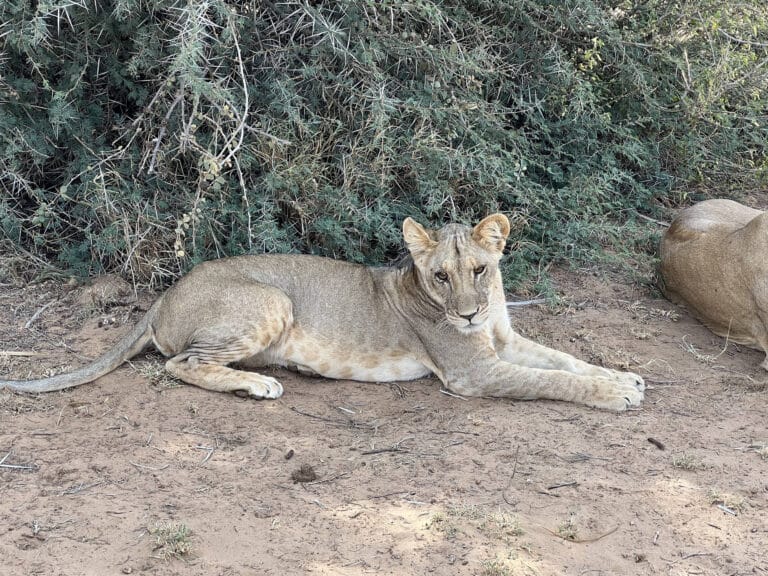
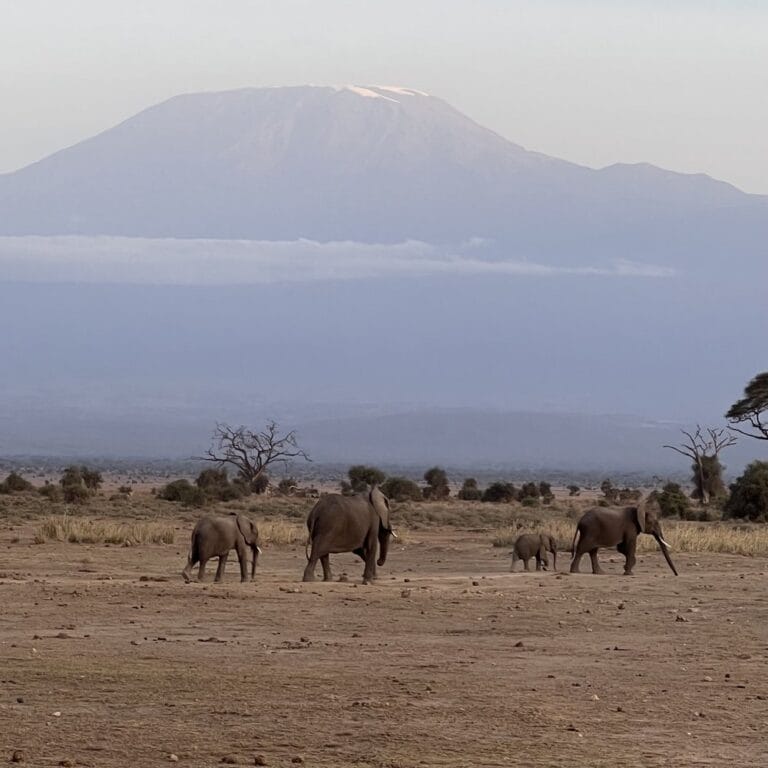
The worry underneath the food question is usually social: I don’t want to be a problem the whole trip. You won’t be. Vegetarian and Indian-vegetarian guests are completely normal in Kenyan safari kitchens. Your parents will eat well. You’ll eat well. And you’ll spend your days watching elephants and lions instead of worrying about dinner.
Ready to plan a trip where the food is genuinely sorted?
Tell us who’s traveling and how you eat — vegetarian, no egg, Jain, whatever it is — and we’ll plan a Kenya safari around it and confirm every lodge in writing before you book. It’s the trip I built for my own family. Plan Your Journey — or, if it’s easier, message us on WhatsApp and just tell me your dietary needs first.
(Curious what the trips themselves look like? See the Nine-Day Explorer, the Nine-Day Signature, or the shorter Six-Day Classic.)
FAQ
Can I eat strictly (pure) vegetarian on a Kenya safari?
Yes. Lodge buffets always have vegetarian options, and with your needs shared in advance, kitchens will prepare dedicated vegetarian dishes for you. Kenya’s long Indian heritage makes this genuinely routine.
Will there be Indian food?
Often, yes — dal, vegetable curries, chapati, rice, paneer are familiar in Kenya. It varies by lodge, which is exactly why we confirm it in writing per property before you book.
My parents only eat Indian vegetarian food. Will they be okay?
This is the family we plan for most. With needs communicated ahead, they’ll eat familiar, satisfying food — not survive on plain rice. We route around kitchens that can look after them.
Can you handle Jain (no onion, garlic or root vegetables)?
It’s stricter and needs more advance arranging, and it isn’t automatic everywhere — but it’s doable with the right properties. Tell us how strict and we confirm it lodge by lodge, in writing, before you commit.
What if I don’t eat eggs?
Easily handled — just tell us. “No egg” is a request Kenyan lodge kitchens understand right away when it’s communicated ahead.
You bring the appetite for the wildlife. We’ll make sure there’s real food waiting when you get back to camp. Plan Your Journey.