The Mixed-Diet Family’s Guide to an East Africa Safari: Eating Well in the Bush
Yes — you can eat wonderfully on an East Africa safari even with mixed dietary needs in one family. Thanks to the region’s deep Indian culinary roots, lodges handle vegetarian, vegan, gluten-free, and halal requests with ease: fresh curries, chapatis, lentils, and salads alongside well-prepared meat dishes. The one essential step is confirming every need in writing with each lodge before you travel — which is exactly what we do.
Feeding a family with different tastes? Plan Your Journey and I’ll confirm every need before you go — or ask a quick question on WhatsApp.
When my husband, our two sons, and I first started planning our trip to East Africa, I had a quiet, persistent worry. I’m a strict Indian vegetarian, while my “three boys” eat white meat. Traveling often means navigating menus that cater to only one side of the table, leaving me packing a suitcase half-full of snacks just in case — and the idea of heading into the remote bush only amplified that fear. Would there be anything hearty and flavorful for all of us? If your family has mixed dietary requirements and you’re dreaming of a safari in Kenya (or Tanzania, Uganda, or Zanzibar), here’s a reassuring secret: everyone is going to eat wonderfully. (Planning the wider trip? Start with our guide to how to plan a Kenya safari.)
Why is safari food so good for mixed diets?
What many first-time visitors don’t realize is the deep historical and culinary connection between East Africa and India. In Kenya and Tanzania especially, Indian spices and cooking methods have been woven into the local food culture for generations. So vegetarianism isn’t a strange concept chefs struggle to accommodate, and local poultry dishes are often beautifully seasoned. Fresh chapatis, savory samosas, spiced lentils, and flavorful vegetable curries sit comfortably alongside well-prepared white-meat options. The local produce is incredibly fresh, and the kitchen teams are highly skilled at crafting meals that are rich, warming, and satisfying after a long day of exploring.
What about halal?
Halal travelers are well looked after in Kenya, and it fits naturally into a mixed-diet family trip. Kenya has a large Muslim population — especially along the coast — so lodge kitchens are used to cooking without pork or alcohol, and many can source halal meat with advance notice. As with any diet, the honest details matter: it’s most straightforward at coastal and larger lodges, and can be more limited at remote bush camps that fly ingredients in. So we confirm ahead — whether your family needs fully halal-certified meat or simply no pork and no alcohol in the cooking — and tell you honestly which lodges on your route are the strongest fit. A halal traveler, a vegetarian, and a couple of meat-eaters at the same table is a very normal safari, and one trip serves them all.
How do you make sure everyone’s needs are met?
The secret to seamless dining in the bush comes down to one thing: preparation. A safari should be an unhurried, comfortable experience where you feel completely looked after — you should never have to advocate for your meal when you should be relaxing. When designing your journey, we don’t just pass along a vague note about your group. We confirm your specific combination of requirements — whether that’s one strict vegetarian and three white-meat eaters, halal specifications, or gluten-free — in writing with every single property before you even pack your bags. Giving the kitchens advance notice gives them the time to source the right ingredients and plan dedicated menus that work for everyone at your table.
What does a day of eating look like?
Your morning usually begins before the sun comes up. Before the first game drive, you’re greeted with hot coffee, tea, and fresh biscuits; when you return, a full, hearty breakfast awaits — fresh tropical fruits, custom-made eggs, toast, baked beans, and warm porridge. For lunch, if you’re out on the reserve all day, the kitchen packs you a box — and because they know your specific profile in advance, it’s not a disappointing afterthought but a thoughtfully packed vegetarian portion for you and a well-prepared white-meat option for the rest of the family, so everyone’s energy stays up while you watch the herds. Dinner is a time to unwind: back at your comfortable lodge, it’s typically a bountiful, relaxed buffet — warming soups, hot flavorful vegetarian mains, dedicated white-meat dishes, and lovely desserts. The buffet style means everyone fills their plate with exactly what they love — always stocked with fresh, local ingredients before the hot mains are served.
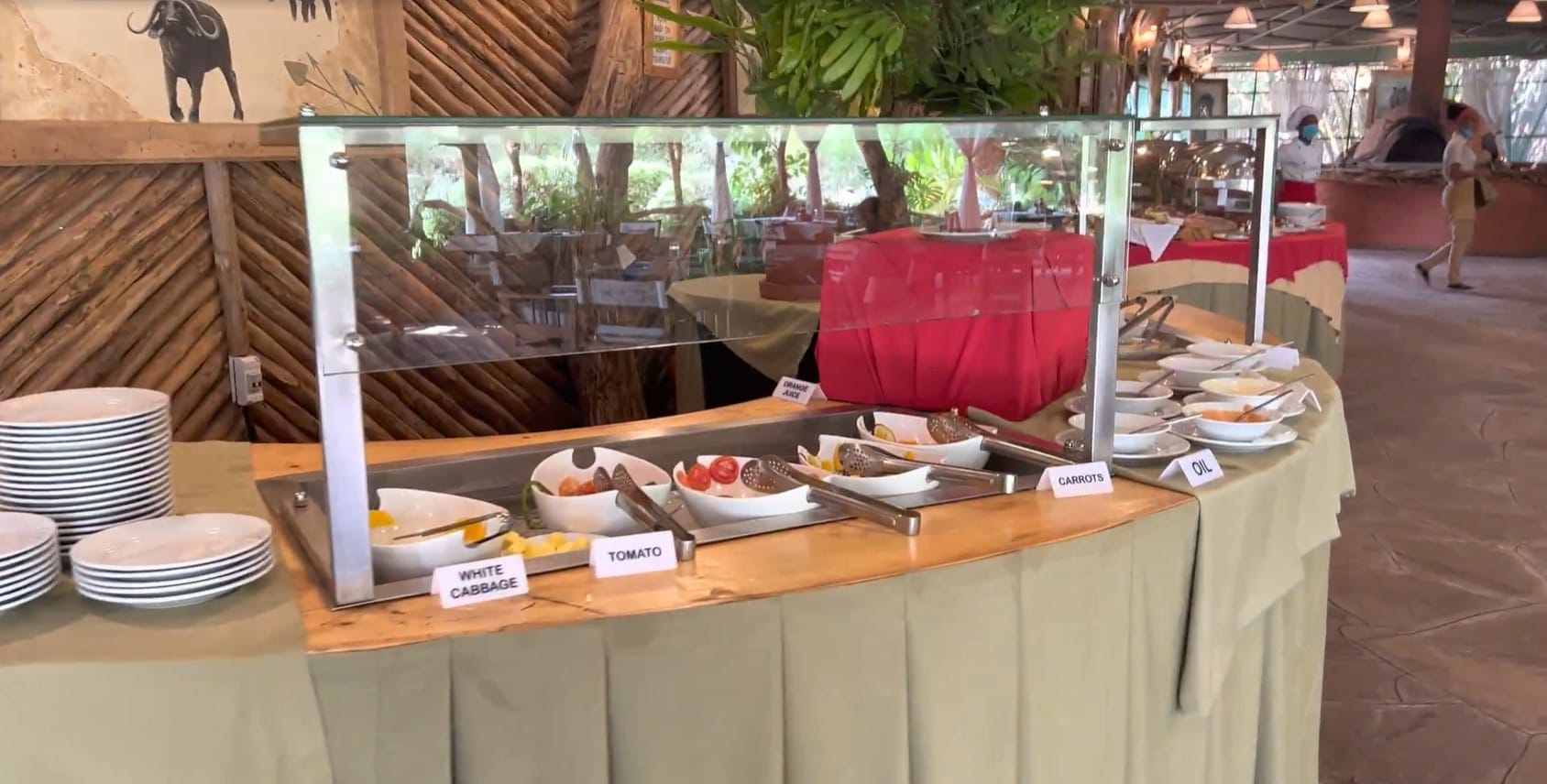
A peek at the fresh, daily salad and buffet stations you’ll find at our favorite comfortable lodges — always stocked with local ingredients before the hot mains are served.
Peace of mind for your journey
Traveling to a new continent should be thrilling, not stressful. I know exactly how it feels to be the nervous first-timer trying to make sure a family with different tastes is fed and happy — and that personal experience is exactly why I’m so meticulous about the details. You deserve to spend your time looking for wildlife, taking photos, and soaking in the vast landscapes, knowing that when you sit down at the table, a wonderful, thoughtful meal is waiting for every member of your family.
Purely vegetarian, Jain, or pure-veg yourself? Our vegetarian and Jain safari guide goes deeper on eating well without compromise.
If you’re ready to experience a carefully crafted, comfortable East Africa safari, Plan Your Journey with us today — or start a WhatsApp chat.
Mixed-diet safari — FAQ
Can one safari feed a mixed-diet family?
Yes — it’s one of the most common ways families travel. Vegetarian, vegan, gluten-free, halal, and meat-eaters can all eat well on the same trip; the key is confirming each need in writing with every lodge before you go.
Is a Kenya safari vegan-friendly?
Yes, with advance notice — plant milk and tofu aren’t always stocked and remote camps fly produce in, so flag it specifically when you book.
Can lodges cater to halal diets?
Commonly, yes — Kenya has a large Muslim population, so cooking without pork or alcohol is familiar, and many lodges source halal meat with notice. It’s easiest on the coast and at larger lodges, more limited at remote camps, so we confirm each property ahead and tell you honestly which are the best fit.
Is there gluten-free food on safari?
Yes, with notice. Ugali (maize meal) is naturally gluten-free; chapati is wheat and often brushed with ghee, so ask for rice or ugali instead.
What about strictly vegetarian or Jain travelers?
That’s covered in depth in our vegetarian and Jain safari guide — including Indian vegetarian food, Jain and no-onion-no-garlic diets, and what to confirm ahead.
Do you need to tell them in advance?
Yes — it’s the single most important step; remote camps plan supplies days ahead.