Kenya Safari for Older Travelers: Is It Safe and Comfortable?
Yes. A Kenya safari for older travelers is safe and comfortable when the trip is built around pace rather than age. Wildlife viewing is done from the vehicle, not on foot, so the real work is choosing an unhurried route, a private 4×4 you can get in and out of easily, and lodges with ground-floor rooms — then confirming those details in writing before you go.
Planning a first safari in your 50s, 60s, 70s, or beyond? Plan Your Journey with Milli — a Tampa Bay advisor who has traveled these parks — or start a WhatsApp chat if you’d rather ask a quick question first.
Is a Kenya safari safe for older travelers?
For most healthy older travelers, yes. Safety on safari has little to do with the animals — you watch them from inside a 4×4, at a distance, with an experienced driver-guide. The things that actually cause trouble are ordinary travel ones: fatigue from long road transfers, a high step into the vehicle, uneven paths after dark, dust, heat, and itineraries that try to do too much.
Every one of those is a planning decision, not a limitation of age. Shorter driving days, a private vehicle, well-lit and step-free lodges, and a realistic pace remove nearly all of it. What you can’t plan away — your own health needs — is worth a conversation with your doctor before you book. Ask about routine vaccines, malaria prevention for the regions on your route, and whether long-haul flights and altitude suit you. For official, current guidance, check the CDC’s Kenya travel-health page; we don’t give medical advice, but we’ll build the trip around whatever your doctor recommends.
If a slower, honest, comfort-first approach is what you’re after, our mid-range Kenya safari guide explains the tier we actually work in — no five-star hype, just comfortable, handpicked lodges and private vehicles.
Which Kenya parks are easiest for older travelers?
Some parks ask far less of you than others — shorter drives to reach them, flatter terrain, and wildlife concentrated enough that game drives can stay short. These are the ones we lean on for gentle-paced first safaris:
Road times vary and stretch after rain. For any park a domestic flight can reach, flying is the single biggest comfort upgrade — it turns a five-hour road day into under an hour. We can build either way; just tell us how much time in the vehicle feels right.
Park | Approx. from Nairobi (dry-season road) | Terrain & pace | Why it suits older travelers |
|---|---|---|---|
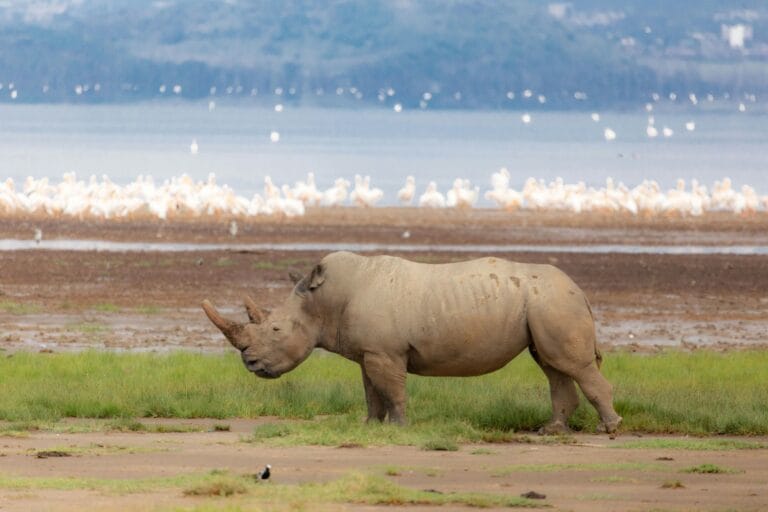
Lake Nakuru | ~2.5–3 hrs, good tarmac | Compact, one main loop | Rhino, flamingos; short game drives; an easy one-night pause |
Aberdare | ~3–4 hrs | Cool highland, forest | Relaxed lodge stays; gentle, scenic, less dusty |
Amboseli | ~4–5 hrs | Flat and compact | Big elephant herds and Kilimanjaro views with short drives |
Maasai Mara | ~5–6 hrs road, or a ~45–60 min flight | Open plains | High wildlife density = less searching; flying skips the tiring road |
Samburu | ~5–6 hrs road, or a short flight | Semi-arid, distinctive | Species you see nowhere else; quieter, uncrowded viewing |
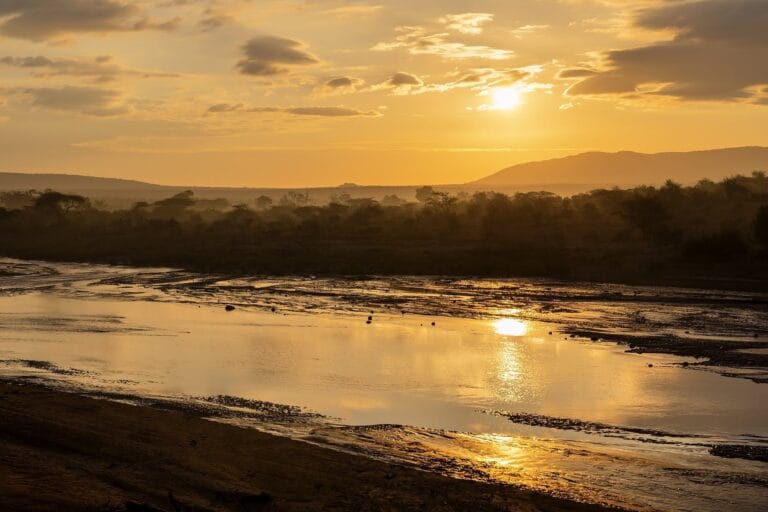
Samburu is our own favorite, and we say that from experience — when we traveled Kenya ourselves, its dry riverbeds and the gerenuk, Grevy’s zebra, and reticulated giraffe you find only in the north were the stretch we didn’t want to leave. It’s the heart of our Nine-Day Explorer. If elephants and the Mara are higher on your list, the Nine-Day Signature pairs Amboseli with the Maasai Mara, and the gentle-paced Six-Day Classic keeps to Nakuru and the Mara for a shorter first trip.
How should you pace a first Kenya safari over 55?
The most common mistake is moving every single night. Each move means packing, a transfer, and settling into a new room — the tiring part of any safari. A better rhythm is two or three nights in each place, so you get full unhurried days and a relaxed departure morning instead of a dawn scramble.
A well-paced first safari also starts gently: a night near Nairobi to recover from the flight before you head into the parks, and a buffer night at the end rather than a long transfer straight to your international departure. Our journeys are built this way on purpose — fewer stops, longer stays, and a private vehicle so you can head back to the lodge whenever your energy dips.
What should you confirm with lodges and vehicles before booking?
Website photos don’t tell you about steps and distances. Before you commit, get these confirmed in writing — and this is exactly the kind of detail we lock down for you:
- Ground-floor room, or minimal steps — and a short, well-lit walk from the room to the dining area.
- Walk-in shower and grab rails if you want them.
- Step height into the 4×4, and whether there’s a grab handle or step stool.
- A private vehicle, not a shared group one, so you set the pace and the stop times.
- How graded the game-drive tracks are, and what the last stretch of road into camp is like.
- Nearest medical facility and the evacuation provider the camp uses.
If an operator answers any of these vaguely, that’s your signal to keep looking. We confirm private 4×4 use in writing for every trip we plan — it’s a standing rule, not an upsell.
Do you have to do early mornings and long drives?
No. Early game drives exist because big cats are most active at dawn — but a private vehicle means the choice is yours. Skip the sunrise drive and sleep in; take a longer mid-morning outing near water instead; come back for a rest at midday, which is the hottest and quietest time anyway. One relaxed three-hour drive often beats two tiring shorter ones. Tell your guide you prefer a gentle pace, and a good one adjusts the whole day around it.
When is the best time to go?
The dry months — roughly January to March and June to October — give firmer roads, less mud, and wildlife gathered around water, which means less driving to find it. The long rains in April and May are best avoided if comfort is the priority. Our full best-time-to-go guide breaks the seasons down park by park.
Ready to plan an unhurried Kenya safari that fits how you like to travel? Plan Your Journey and Milli will map a realistic, comfort-first route with you — or ask a question on WhatsApp. We traveled Kenya ourselves before we ever planned it for anyone else.
Want our First-Safari-After-55 guide to keep?
Enter your name and email and we’ll send the one-page PDF — pacing, comfort, and what a day really feels like — straight to your inbox.
Ready to plan a gentle, comfortable safari experience? Plan Your Journey with Wesley Chapel Travel.
Is a Kenya safari physically demanding for older travelers?
Not usually. Wildlife viewing happens from the vehicle, so most of the day is spent seated. The main effort is getting in and out of the 4×4 and walking short distances at lodges — both easily managed with a private vehicle and step-free rooms.
What age is too old for a safari?
There’s no fixed cutoff. Travelers in their 70s and 80s enjoy Kenya safaris regularly. What matters is a realistic pace and lodges chosen for easy access, not a birthday. Check with your doctor about long-haul flights and any medical needs.
Should older travelers fly or drive between parks?
Where a domestic flight is available, flying is the biggest comfort gain — under an hour versus five or six hours by road. Short, close parks like Lake Nakuru are comfortable to reach by road. We can plan either.
Are private safaris better for seniors than group tours?
Generally, yes. A private vehicle lets you set the pace, choose your drive times, take bathroom and rest breaks on your own schedule, and skip a long loop when you’re tired — flexibility that shared group tours can’t offer.
Can you accommodate mobility or dietary needs?
Yes. Tell us at planning time and we’ll match lodges and vehicles to your needs and confirm the details in writing. Vegetarian and other diets are straightforward — see our vegetarian Kenya safari guide.